Rummy habits at the table: joker placement, discard tracking and a deadwood count you keep in your head
Three habits decide most of a beginner's variance in 13-card Indian rummy: where the printed joker sits in the hand, what the player's own discard pile has already said, and whether the running deadwood sum is actually falling. The desk publishes this explainer because the habits are teachable in a session, and because every published strategy on this site sits on top of them.
Why these three habits, and not a system
Beginners who read a strategy chapter before a session often arrive at the table with a system in their head and no habit in their hands. The system collapses on the first difficult draw, because the player cannot hold all its moving parts in working memory while the closed pile is being dealt. A habit is a single rule the body has already learned, so attention can stay on the hand instead of on the rule. Joker placement, discard tracking and the running deadwood count are three habits the desk has seen survive this collapse in the hand logs the strategies chapter asks readers to keep.
The order is deliberate. Joker placement is read first because the printed joker is the most information-leaking single card in the deal. Discard tracking is read second because every card the player has already thrown is now public. The running deadwood count is read third because it is the only one that needs no memory of the opponents, only of what is in the player's own hand. Each habit reinforces the other two: a joker placed early is a card no longer in the discard pile, and a falling deadwood count is the proof the first two habits are working.
Place the joker before you place other cards
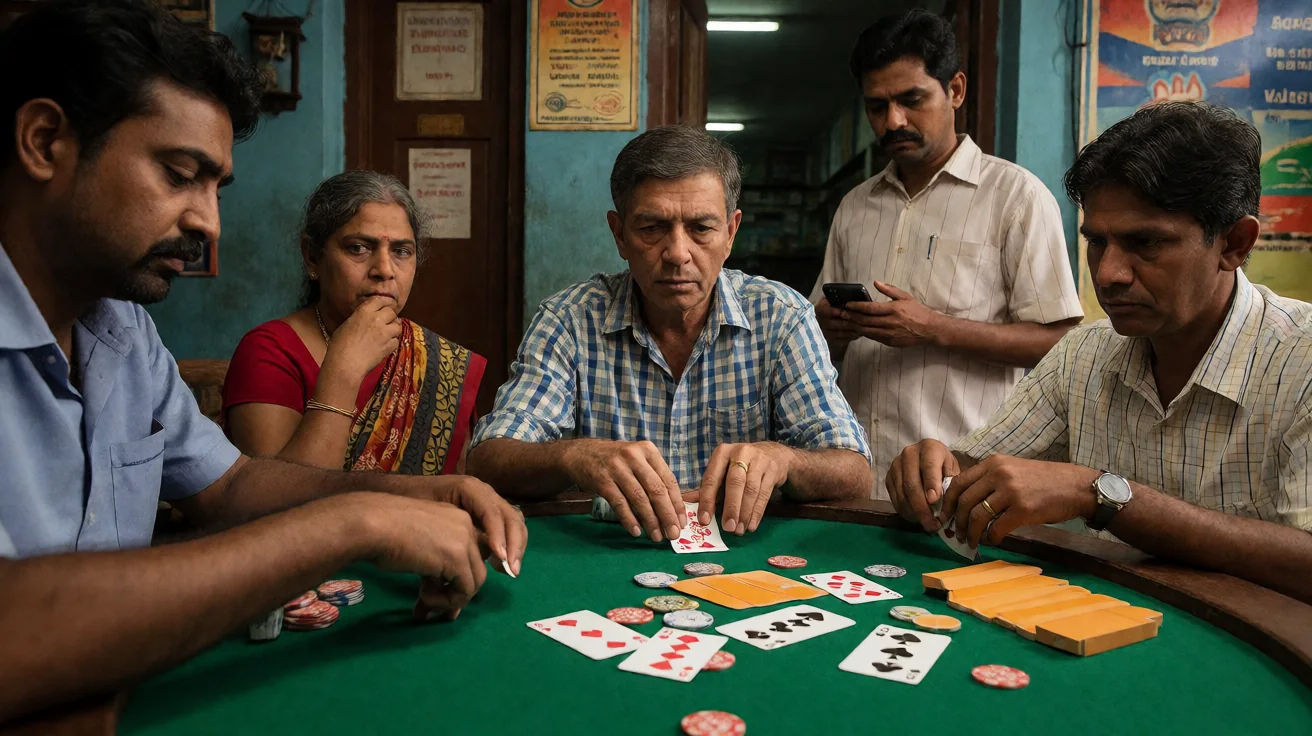
The printed joker is the most valuable card in the player's hand for the first half of the deal. Treat it as the keystone of an impure sequence and place it early. Holding it too long "in case" makes the joker a wild card in the discard pile at a moment an opponent needed it, and forces the placement under time pressure. The habit is to scan the hand on the second turn, locate the joker, and place it on the impure-sequence slot that fits the suit the table is least likely to read.
Picking the joker from the open pile is a public signal that the player is running an impure sequence. If the player can afford to give that signal, the placement is fine. If not, drop the joker immediately on a discard the table will not read as a sequence bridge, and draw from the closed pile next turn. Reading the joker as a high-information card, not a high-point card, is the change the habit makes in how the player discards around it.
Figure I. The printed joker as the keystone of an impure sequence. The card is high-information, not high-point; placement reads to the table before the discard does.
One exception. If the open pile also contains a card that completes a pure sequence, the pure sequence is more valuable than the joker placement. A pure sequence carries no joker and signals nothing about the player's hand beyond the suit. The rule "place the joker first" is a default, not an absolute. The hand is the read; the rule is the fallback when the read is not yet clear.
Track your own discard pile, not just the open pile
The card the player discarded two turns ago is the card an opponent may now be reading. If the player threw a 7 of spades because the hand did not need it, and the opponent picks a 6 of spades from the closed pile, the opponent may be running a sequence past the player's discard. The remedy is not paranoia; the remedy is keeping the player's own discards in mind. Most platforms display the discard pile visually, so the cost in attention is small. The gain is real: the player who tracks their own discards knows which cards are public, and which are still safe to hold.
Spend the first thirty seconds of every hand scanning the discard pile visually, and the next thirty scanning it in memory. After twenty hands, the scan becomes automatic. Most analyses on the strategies chapter, including the hand-log research note, sit on top of this habit; without it, the analyst cannot read the deal.
The advanced version is to replay the discards and picks at the end of each hand, and ask what each opponent was trying to do. The reader will not always be right. The point is to build retrospective analysis, the source of every analysis the desk publishes. Beginners who build this habit in their first ten sessions tend to out-read beginners who skip it, even at the same stake.
Keep the running deadwood count, not just the declaration total
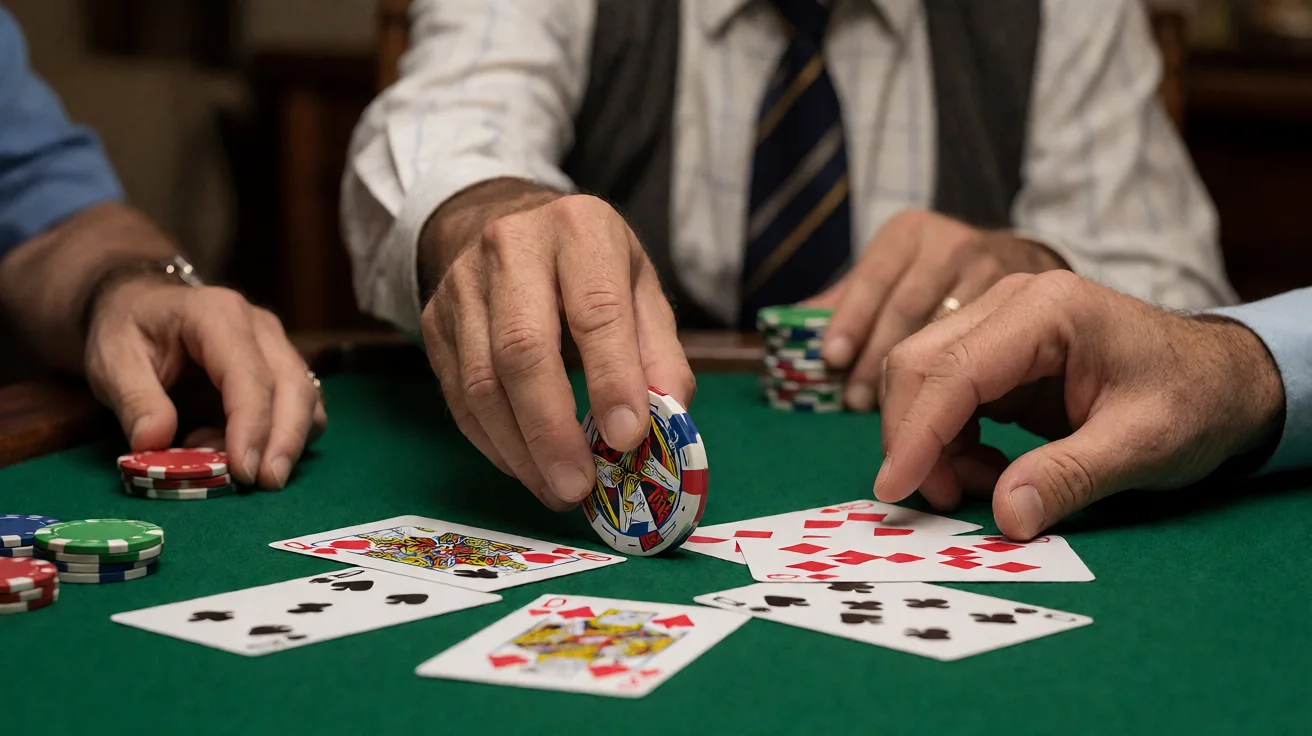
The single habit that improves the player's reading of a hand is to count the deadwood sum at every draw and every discard. Doing this for ten sessions stops the mistake of pushing a hand that has been dead for two turns. The skill is not in the count; the skill is in noticing when the count has stopped falling. A deadwood sum that is no longer falling is a hand that is no longer improving, and a hand that is no longer improving is a hand the player should drop rather than push.
Figure II. The running deadwood count written down on each turn. Writing the number makes it a decision variable instead of an ambient feeling.
Write the number down on a notepad on desktop, or say it under the breath on mobile. Articulating the number makes it a decision variable. Feelings about deadwood are unreliable; counts are not. The common counter-objection is "but it slows me down". The slowdown is the point: it forces every draw to be a deliberate decision. After ten sessions, the count happens automatically and the slowdown disappears.
A forced declaration with a deadwood sum greater than the opponents' combined likely deadwood is a worse expected outcome than the published mid-drop or full-show penalty on the platform. The platform review records the published thresholds, including mostbet's 20 / 40 / 80 first-drop / mid-drop / full-show figures at a 1-rupee-point table. A reader who remembers those numbers will see session variance drop noticeably across the next twenty sessions.
What these habits cannot do, and where the strategies chapter picks up
Three limits apply. First, the habits record the player's own play, not the opponents'. A hand log built on these three habits will be honest about the player's joker placement, discard pile and deadwood count, and silent about the opponents' joker placements and discard picks. Second, the habits do not protect the player from the operator's published Random Number Generator or from the format's published RTP. A reader who plans to play with real money should read the platform review and the rules primer before depositing; the habits are decision tools inside a session, not a substitute for the platform check before the session.
Third, the habits interact with stake and session length. A session stake the player cannot re-buy at tilts decision-making and overrides the habits. A session past the published session-time indicator degrades decision quality and overrides the habits too. The desk's Tips chapter covers both limits, and the strategies chapter's patience-math note covers the variance window where the habits stop being enough. A reader who builds the three habits first and reads the limits second is reading the desk in the order the desk publishes it.
What to watch in the next session
Three measures tell a beginner whether the habits are in place. First, is the running deadwood count written down or spoken aloud at every draw? If yes, the habit is in place; if no, it has not yet been built. Second, can the player name the three highest-information cards in their own discard pile at any moment? If yes, the discard-tracking habit is in place. Third, is the joker placed by the second turn? If yes, the placement habit is in place; if the joker is still in the player's hand at the third turn, the placement habit has not yet been built.
The next milestone is ten sessions of doing all three together. After ten sessions, the count, the scan and the placement happen automatically, and attention is free for the higher-order reads the strategies chapter publishes. The habits are the foundation; the strategies are the roof. The desk publishes this order because readers who build the foundation first read the strategies more accurately.